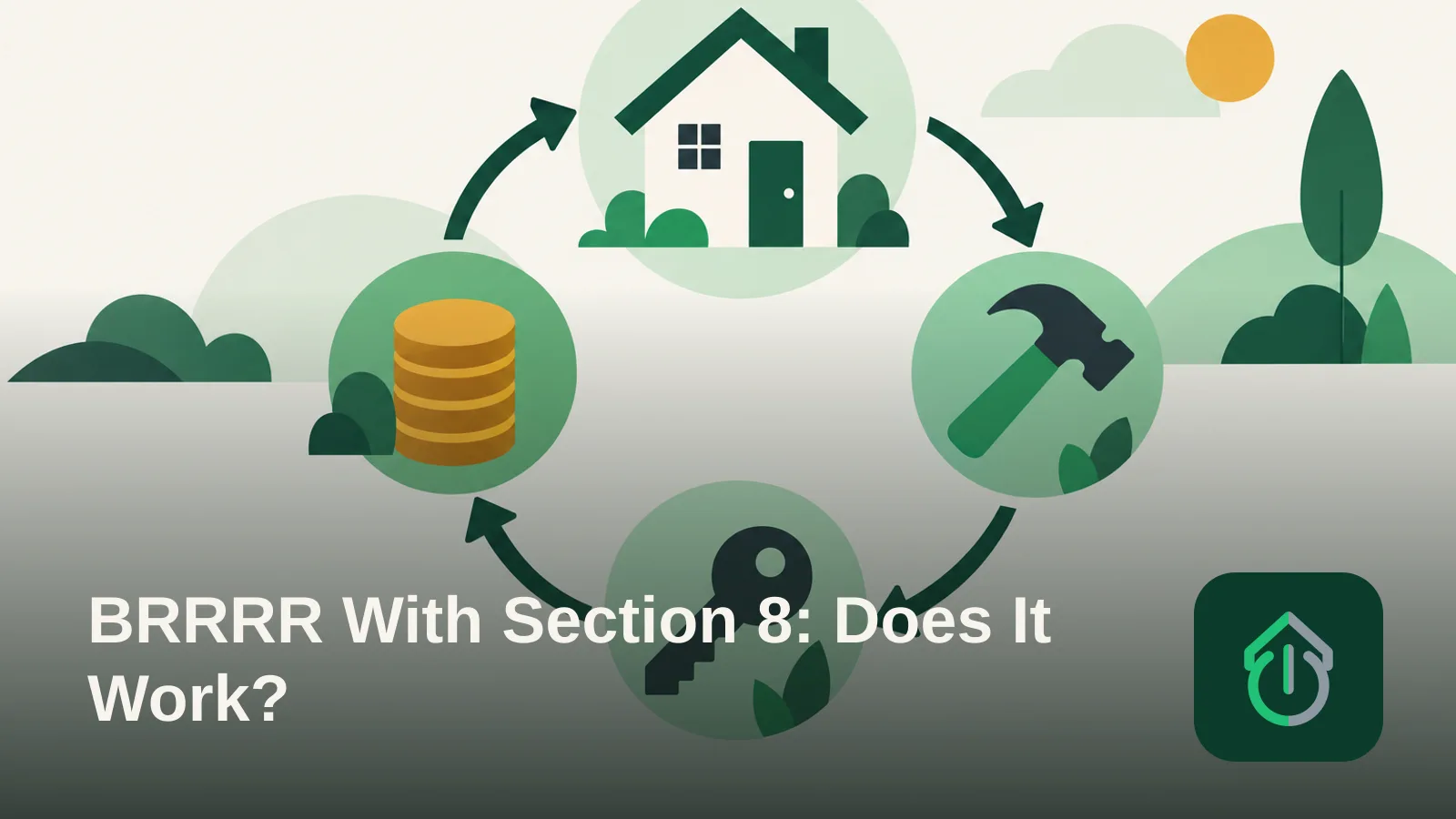
Yes, the BRRRR strategy can work with Section 8 tenants, but the voucher program changes how you underwrite three of the five stages: rehab, rent, and refinance. This post walks through buy, rehab, rent, refinance, and repeat and flags where Section 8 rules help, hurt, or just require extra homework.
What BRRRR Means, and Why Section 8 Changes the Math
BRRRR stands for buy, rehab, rent, refinance, repeat. The idea is to buy a property below value, fix it up, rent it out, pull your cash back out with a refinance based on the new appraised value, and use that cash on the next deal. It's a way to recycle a limited amount of capital across multiple properties instead of tying it all up in one.
Section 8, more formally the Housing Choice Voucher program, doesn't change the five stages, but it changes the inputs at a few of them. The rehab has to meet an inspection standard. The rent is compared against a local payment standard instead of whatever the open market will bear. And the refinance lender will look at that income the same way they'd look at any other lease. None of this makes BRRRR impossible with voucher tenants; it just means the underwriting has a few extra steps.
The Buy Stage: Underwriting With an Exit in Mind
The buy stage is where rules of thumb like the 70% rule and the 90% max-offer rule usually come from flipping, but investors doing BRRRR use similar logic: back into a maximum purchase price from the after-repair value, then subtract rehab costs and a margin for the unexpected. If the deal only pencils at full market rent and falls apart at a voucher-level rent, that's worth knowing before you close, not after.
Because the eventual refinance depends on the property appraising at or above the ARV you underwrote, it's worth being conservative here. A deal that only works if everything goes perfectly rarely survives contact with a real rehab.
The Rehab Stage: Building to Pass Inspection, Not Just to Look Nice
Voucher rentals have to pass a habitability inspection before a housing authority will approve the lease, and most authorities also do periodic inspections afterward. These standards cover things like working smoke detectors, secure handrails, functioning heat, and no exposed wiring — items that a purely cosmetic flip-style rehab can sometimes skip.
Inspection standards and the exact checklist vary by local housing authority and some areas are shifting between older and newer inspection protocols. Budgeting rehab dollars toward these pass/fail items first, before paint and finishes, reduces the odds of a failed inspection delaying your first month of rent.
- •Working smoke and carbon monoxide detectors in the right locations
- •Secure, code-compliant handrails and guardrails
- •Functioning heating system rated for the climate
- •No exposed wiring, missing outlet covers, or obvious electrical hazards
- •Windows and doors that open, close, and lock properly
The Rent Stage: Fair Market Rent vs. What the Market Will Bear
In a standard BRRRR, you rent at whatever the local market supports. With a voucher tenant, the rent is compared against the housing authority's payment standard, which is built from HUD's fair market rent data for that area. The tenant's portion is based on their income; the housing authority or public housing agency pays the rest directly to the landlord under a housing assistance payment contract.
Payment standards are set per area, per bedroom count, and are updated periodically, so they vary by city and even by zip code in some metros. This is general information, not a quote for any specific property — always confirm the current payment standard with the local housing authority before finalizing your numbers.
Applying something like the 1% rule or a stricter 1.25% or 2% screen to a voucher-based rent estimate works the same way it does for market rent: it's a quick filter, not a substitute for a full underwriting pass once you know the actual payment standard for that unit.
The Refinance Stage: What Lenders Want to See
Once the property is rehabbed and leased, the refinance stage pulls your cash back out based on the new appraised value, not what you paid. Many BRRRR investors use DSCR loans for this step, which size the loan to the property's rental income rather than the borrower's personal income.
A signed lease with a reliable payment history — including the portion paid directly by a housing authority — is generally treated like any other lease by a DSCR lender, though individual lenders set their own policies, so it's worth asking directly. The 50% rule, which assumes operating expenses eat up roughly half of gross rent, is a reasonable starting point for estimating the net operating income a lender will use, but actual expense ratios vary by property age and market.
The Repeat Stage: Scaling Market by Market
The repeat stage is where small differences compound. If payment standards, inspection rules, and processing timelines vary by housing authority, then the second and third property in a different city or even a different part of the same metro may follow a different playbook than the first. Building a repeatable checklist for each new market saves time once a BRRRR strategy becomes a portfolio rather than a single deal.
Tools like OnOffDeals can help with the buy-and-underwrite side of this by surfacing deals and pairing them with HUD fair market rent data for that area, which is useful for a first-pass rent estimate before you confirm exact numbers with the local housing authority.
Frequently asked questions
Is BRRRR riskier with Section 8 tenants than with market-rate tenants?
It's a different risk profile, not necessarily a higher one. Voucher payments are often considered reliable since a portion comes directly from a housing authority, but inspection requirements and payment standard rules add steps that a standard market-rate rental doesn't have.
Can you refinance a BRRRR property that has a Section 8 tenant in place?
Generally yes. Most refinance and DSCR lenders look at the lease and payment history regardless of whether part of the rent comes from a housing authority, but specific lender policies vary, so confirming with your lender before closing is worth it.
Does Section 8 pay more or less than market rent?
It depends entirely on the local payment standard, the unit's bedroom count, and current market rents in that area — there's no universal answer, and this varies by housing authority. Always check the current local figures rather than relying on a national average.
Do the 70% or 90% rules still apply if I plan to rent to a voucher tenant?
Yes, these buy-stage rules of thumb are about leaving margin between purchase price plus rehab and the after-repair value; they work the same way regardless of who eventually rents the unit. What changes later is the rent assumption you use to project cash flow.
How this post was made: the figures above come from OnOffDeals’ own market-scan data (refreshed roughly monthly); the draft was written with AI assistance and checked against that data before publishing. Everything here is an estimate to help screen deals, not financial advice.
Underwrite your next deal in about a minute
ARV from real closed sales, a rehab budget that reads the listing, HUD rent, cash flow and flip profit after every cost, with every comp shown, used or rejected. Start free. Your first week is on us.
Try OnOffDeals free